Sunday 14 th September 2014
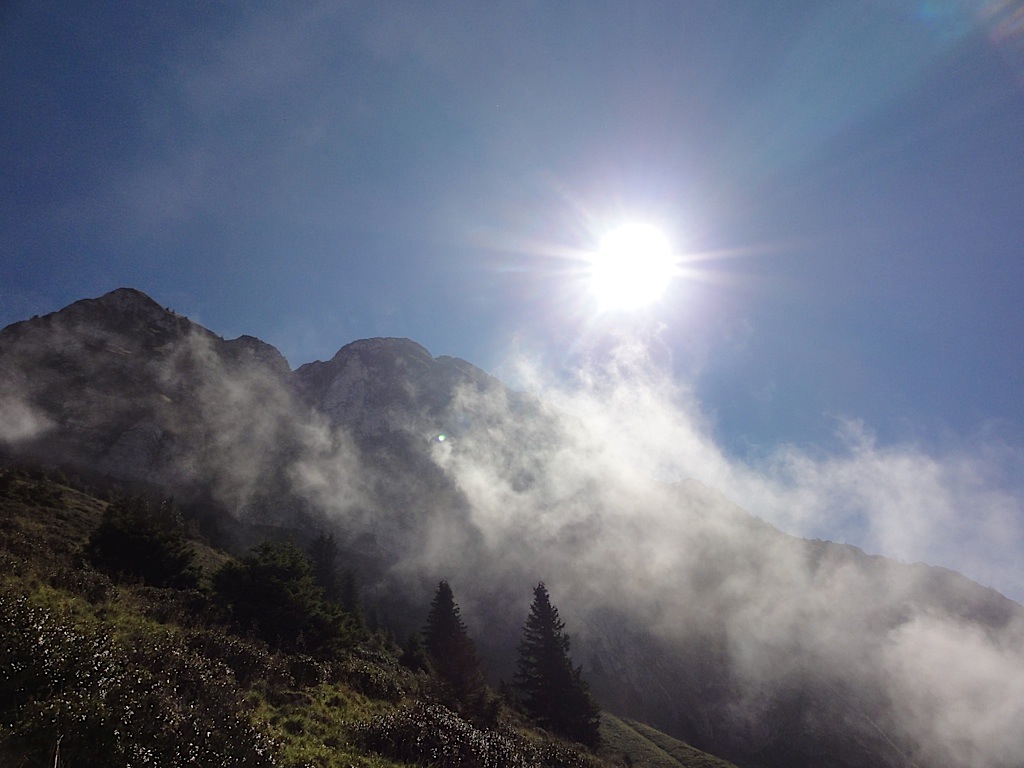 Above Montreux, there are the Rochers de Naye. The initial idea was to go from the col de Jaman to the summit, but in the end we decided to take a shortcut by taking the train that leaves from Montreaxu. The route taken by the train has some very impressive views. The excursion is rather vertical - it climbs about 500 metres in about two hours of walking. The most annoying part is that at the beginning, you constantly climb and descend, only to be at the same level. Once you arrive at the canal, the path climbs towards the col with impressive viewes of the Leman lake.
Wednesday 16 th July 2014
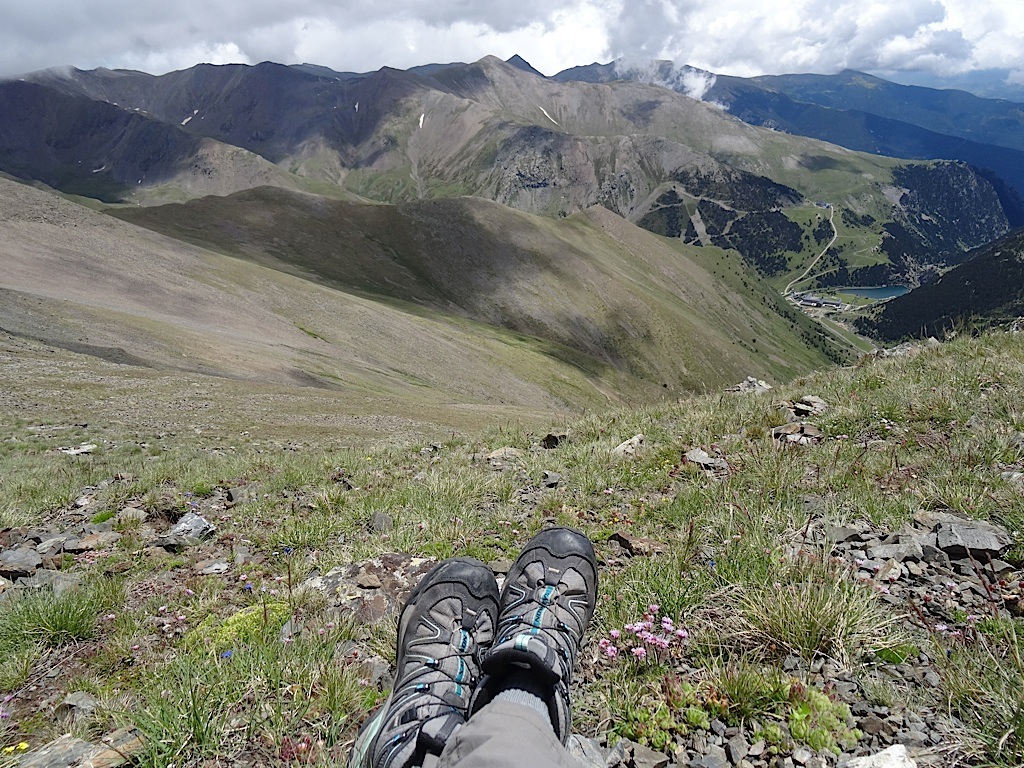
On the weekend of the 12th of July, together with Jaume, Neus and Narcis, we wanted to hike from Núria to Carança but due to the bad weather, we decided to simply hike to the summit and return. The initial idea was to go up the Puigmal but as the excursion is long and a storm had been forcasted, we decided against it. Instead, we decided to hike up Finestrelles. When we arrived back at the Vall of Núria we realised we had lost the last the train, and as if we hadn't hiked enough, we were forced to walk all the way back to Queralbs, and ended up walking for 11 hours.
Sunday 29 th June 2014
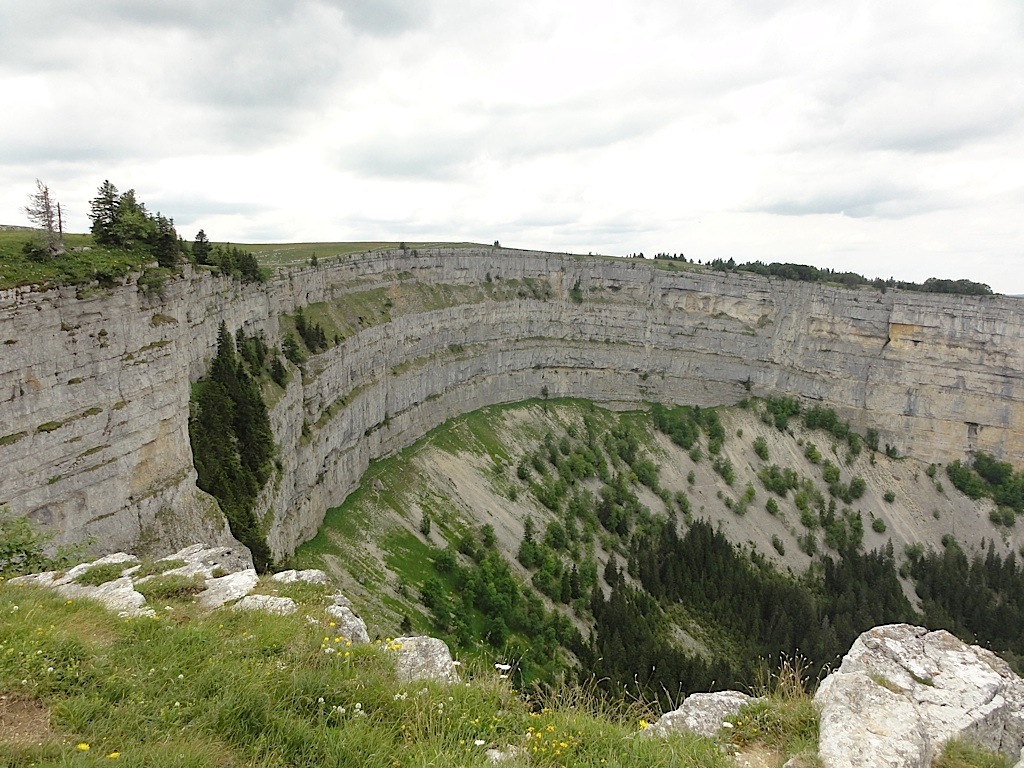 At the Vall de Travers, in the canton of Neuchâtel, we find a singular circ formation named the 'Creux de Van'. We were lucky enough to find a family of mountain goats - they were calmly grazing at our side as we were gaining altitude. The sights from the superior part of the circ are scary and it is rather annoying to see someone on a mountain bike or a stroller for children right next to you, right after your exhausing walk... but of course, they took the road to get here...
Saturday 21 st June 2014
 Just in front of Geneva, we have Le Grand Salève. The mountain is not very tall, but it does have a very vertical facade. In the superior part of this facade, there is an aerial passage that almost goes through the rock - it is the Corraterie. From the Corraterie we can see the Trou de la Tine, an impressive rocky formation, which seems, from far, an immensive cave, a hole in the wall but when you are inside you see there is no ceiling. Following the path a little more, we cross the Grotte d’Orjobet, a cave that is adapted with stairs that allow you to climb from 'Le Coin' until the Corraterie. The excursion is very aerial, with impressive views of the Montblanc, the region of Geneva and the Jura.
Sunday 15 th June 2014
.jpg) It wouldn't cross your mind, that from the centre of Montreux, and passing beneath the bridges of the highway, there are gorgues like the 'Gorges du Chauderon'. It is an easy walk, but with strong vertical slope. The path is very walkable, it is full of stairs to help us with the ascencion. The change of vegetation changes a lot from the bottom part that reaches Montreux where it seems more like a tropical forest, and the top part is more typically swiss.
It wouldn't cross your mind, that from the centre of Montreux, and passing beneath the bridges of the highway, there are gorgues like the 'Gorges du Chauderon'. It is an easy walk, but with strong vertical slope. The path is very walkable, it is full of stairs to help us with the ascencion. The change of vegetation changes a lot from the bottom part that reaches Montreux where it seems more like a tropical forest, and the top part is more typically swiss.